Use Your Autistic Strengths to Build a Career

Updated: Jul 15

Subreddits for autism abound with self-loathing posts. Since this social platform allows members to anonymously share feelings that they might not have otherwise shared in-person, many of these subreddits have become safe spaces for individuals to be honest about how autism has caused them to suffer.
Some members have written about issues with sensory overloads, problems with completing daily tasks and the exhaustion they have felt from masking (subverting autistic mannerisms in an effort to better "fit in"). A lot of them have complained about their lack of employment or the struggles they have faced with applying for social security disability payments.
Being socially awkward has made it difficult for many neurodivergents to make and retain friends. The fact that many of us have varying degrees of problems with understanding figurative language, hand gestures, facial expressions, and tones of voice; has not made it easier to communicate with neurotypicals (non-autistic people).
Many people on the spectrum have described feeling out of touch with neurotypicals, as though they were on the outside, looking in through a window. Others have described feeling as though they were aliens, here to study and observe beings that look like us but are not.

Accept Who You Are and Build Upon Your Strengths
The first step to moving on with your life is to accept who you are. No amount of raging or wishful thinking will ever change the fact that you're on the autistic spectrum. The best you can do is to identify your strengths and to then build upon these strenths so as to offset any perceived deficiences.
Having lived throughout most of life without having realized that I was autistic, after getting my diagnosis at 60 years of age, I found that I had already long since, built upon my strengths.
It should be noted that what worked for me, won't necessarily work for anyone else. Since autism is a spectrum disorder, it follows that we all have varying strengths and weaknesses and interests.
My strengths have included the following:
I am hardworking and tend to be project oriented.
My special interests include all things culinary, history, video editing, reading science fiction and fantasy, and writing.
Creativity
Problem Solving
Attention to detail
A strong sense of justice
Honesty
A tendency to not be be influenced by socially-derived biases
Organization

How I Utilized My Strengths
to Build a Teaching Career
According to a 2017 report from the A.J. Drexel Autism Institute, only 15-30% of people with autism are employed. This survey complements a 2024 study from the UK Department for Work and Pensions which reports that only 22% of neurodivergents are employed. Two other studies from 2018 which were cited by Amaze, have reported that in Australia, the employment rate for autistic people is 31.6%.
Not only are people with autism underemployed butwhen compared to the employment rates of people with other disabilities, those of us with autism are out performed by people with learning disabilities, intellectual disabilities, and even behavioral issues.
Part of the reason for this disparity is because many of us don't do well in job interviews. Traditional hiring practices rely heavily on abstract social cues, direct eye contact, and rapport-building. This severely disadvantages autistic applicants, even if they possess superior technical skills for a given role.
Wowing the Interviewer(s)
In the days before laptops back in 1982, finding a teaching job was highly competitive. As a novice graduate with no prior instructional experience other than student teaching, I realized that I needed to differentiate myself from other applicants.
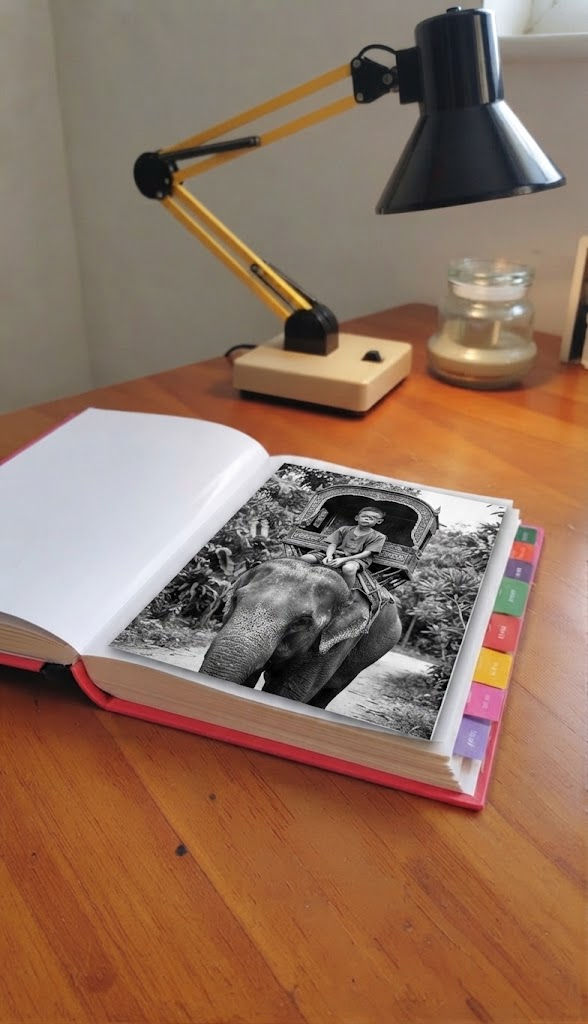
I did this by creating a teaching scrapbook. Using photographs from my student teaching experience as well as pictures from my childhood, I created a tabbed support book to use in job interviews.
I began by anticipating questions that a potential employer might ask. For example, if an employer were to ask how I might work with children from diverse backgrounds; I would show the interviewer pictures from my childhood. Since my father was in government service and I grew up abroad, I have pictures of myself playing a hand drum in Accra, Ghana, of being in a Farmers' Market in Bangkok, Thailand, and of standing aboard a handcarved teak houseboat on Dal Lake, in India. While none of these pictures had anything directly to do with teaching, they highlighted my experience with living abroad and gave me the opportunity to diferentiate myself from other applicants.
A question about creativity showed a diorama of a wigwam that was made with toothpicks and tree bark. A question about how I taught students to write in paragraphs would result in my showing a picture of a process writing outline.
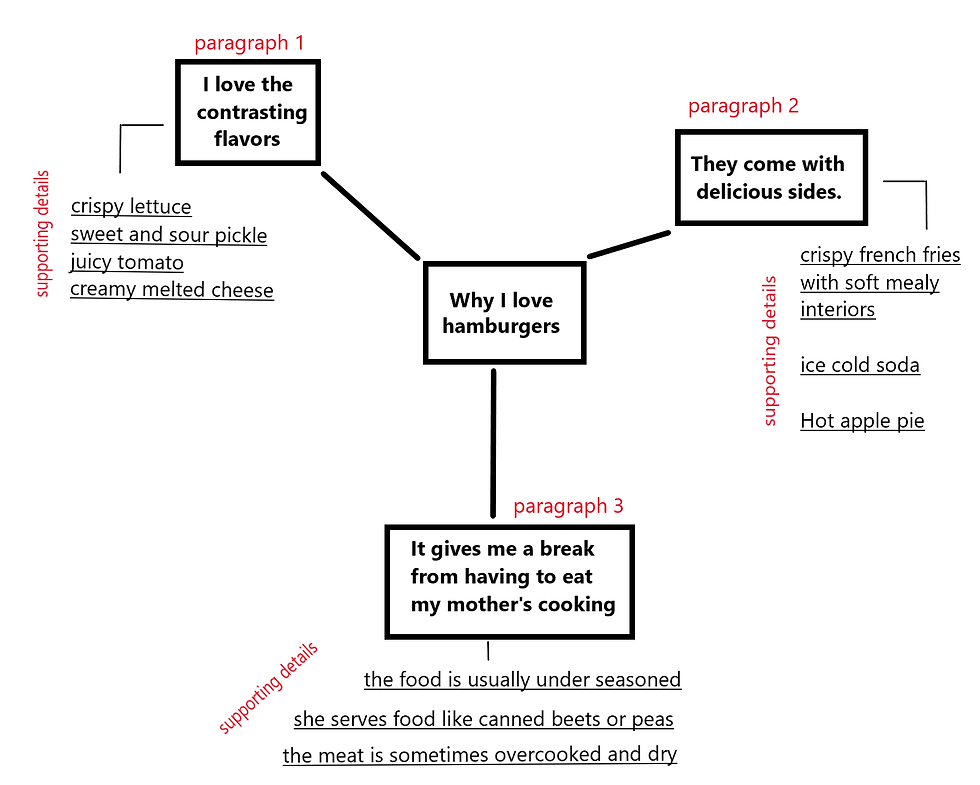
Each image I shared helped to illustrate my answer. It also demonstrated my sense of organization in that I was successfully able to anticipate most of an interviewer's questions.
How I Organized What to Teach
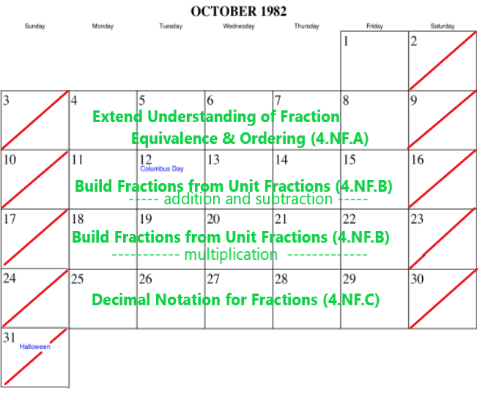
Since my district issued a school calendar, I got several identical calendars for the 1982-1983 school year. I organized the school year by first blocking out weekends, holidays, and vacation schedules. I then counted out the instructional standards for each subjectand divided the standards by the number of instructional days to give myself a rough idea of how many days I would have to teach each objective.
As the school year progressed, I was able to note which instructional objectives took longer than others. By year's end, I had a revised schedule to use for the following schol year.
I Built Structure into My Daily Routine
I posted classroom rules and was firm, fair, and consistent about enforcing them.
I established basic procedures. For example, if a student needed to use the restroom, instead of disrupting my instruction with a, "Could I use the bathroom?" question, I taught my students to show me one finger. I would then nod yes or shake my head no in response without having to interrupt what I was otherwise saying or doing.
Students signed out on a clipboard by the front door. They wrote their name and the time they left. Upon their return, they signed back in.

Core Strategies for Long-Term Success
As you can see from the above examples, I leveraged special interests in reading, writing, and history to build a 17 year long elementary teaching career. After burning out as an elementary teacher, I pivoted to earning a culinary degree and to working in the food service industry for five years before returning toe education as the chef instructor of a high school Culinary Arts program. I taught Culinary Arts for 15 years before retiring from education in 2024.
What can you do to find your own career path?
Find the right environment: Seek out roles that match your strengths—such as deep focus, pattern recognition, or high attention to detail. For many, technical fields (IT, research), data-heavy roles, or independent tasks are highly sustainable.
Request reasonable accommodations: Advocate for your specific needs, which may include written instructions, noise-canceling headphones, flexible start times, or a quiet dedicated workspace. Learn more about legal rights and formal processes via the Job Accommodation Network.
Set and protect boundaries: Reduce burnout by establishing clear limits on your time. Avoid taking on extra, undefined projects and give yourself permission to step away from the workplace completely on your days off.
Prioritize communication: Ask management to provide specific, step-by-step instructions and regular, direct feedback rather than vague expectations.
Manage sensory and energy levels: Monitor your daily energy depletion. Build predictable routines and use your breaks to decompress in a quiet area if you are prone to sensory overwhelm.
Explore vocational support: Job coaches, specialized mentorship, and peer groups can provide necessary guidance and act as a safety net. Resources are available through the Autism Speaks Roadmap to Meaningful Employment.

Are you employed and if so, what do you do?
Please feel free to share your thoughts in the comments.


Comments